


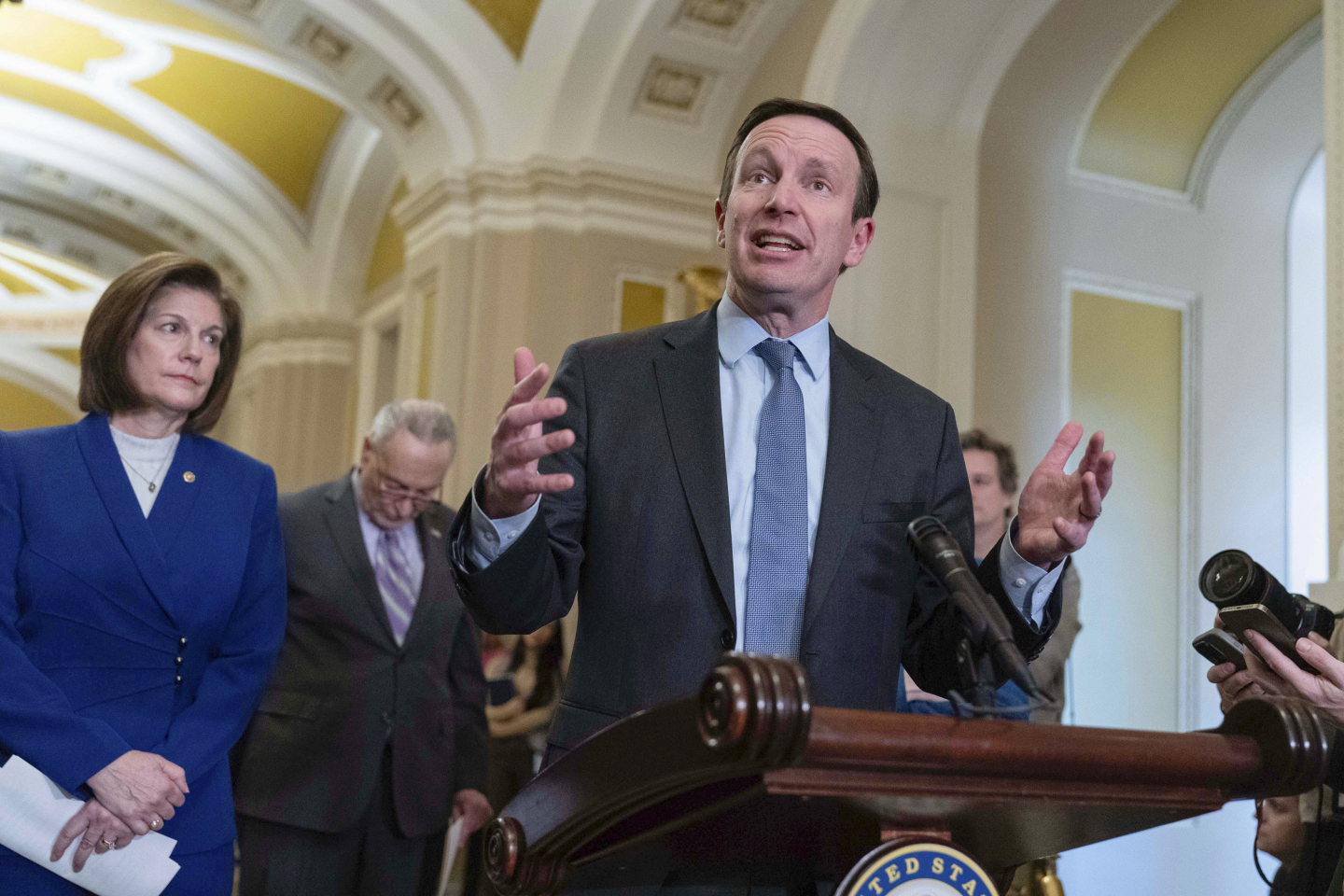
Senator Chris Murphy Almost Gets It

Cultivating social connection and combatting loneliness ought to be the bipartisan effort of our time.
Whether you’re a social conservative or a Bernie-loving progressive, the fact remains that we are social creatures, hardwired for companionship and common cause.
Senator Chris Murphy understands this, perhaps better than any one of his colleagues in Congress.
In his new book, Crisis of the Common Good: The Fight for Meaning and Connection in a Broken America, Murphy sets himself apart from the other establishment suits in his conference by demonstrating, not only the ability to articulate the shortcomings of neoliberal orthodoxy and the markets-over-people mind virus that has swallowed both parties, but a remarkable comprehension of the ascendant New Right and post-liberal strains of the conservative movement, typified by groups like Oren Cass’s American Compass.
Murphy, though an ideological Leftist at heart, is thoughtful enough to see that conservatives are a nuanced bunch. Throughout the book, the Connecticut Democrat relates times when he’s worked with—or at least tried to work with—Senators Josh Hawley, Marco Rubio, and JD Vance, all of whom represent a break from the traditional Reaganite strain of the GOP.
In fact, in 2024, Murphy, along with Utah's Republican Governor, Spencer Cox, launched their “Restoring the Common Good” initiative, comprised of thoughtful liberals and conservatives alarmed by the American peoples’ increasing sense of loneliness, atomization, and unbelonging.
During one meeting, Murphy recalls AEI Senior Fellow and conservative intellectual Yuval Levin’s important warning about top-down, policy solutions to America’s fraying social fabric: “When you think about the national government,” Levin remarked, “its role is to protect the entire space between the individual and the state... not to fill that space.”
This is a crucial, and perhaps irreconcilable, difference between the communitarian Right and the progressive Left: the former believes in civil society, which sprouts from the bottom-up, while the latter believes that Washington ought to play a role in the restoration of American community.
Murphy’s reflex is thoroughly progressive. His instinct is to deploy the expertise of Washington on America’s societal maladies. Well-crafted policy, however, likely won’t change hearts and minds.
To be sure, Murphy is easily one of the more thoughtful members of the Democratic Party. Much of his thesis in Crisis of the Common Good, however, is greatly undermined by his incessant references to President Trump.
When you look Trump Derangement Syndrome up in the dictionary, you’ll find a picture of Senator Chris Murphy.
After scanning the Kindle version of Murphy’s book, I discovered that he mentions Trump a whopping 208 times. That’s 208 times in a 300-page book. If that isn’t derangement, I don’t know what is.
Trump, in Murphy’s view, is a racist demagogue who shrewdly—and connivingly—recognized America’s breakdown in social bonds and then exploited voters’ emotional vulnerability and desire for connection.
Trump, in other words, doesn’t actually care about the loneliness that Americans feel; he cares about their votes.
Sure, did despondent voters in middle America vote for Trump because his “Forgotten Man” message resonated with them? Absolutely. That, however, doesn’t get at the root of the issue. And it certainly doesn’t warrant 208 mentions.
This obsession with Trump, whom Murphy writes “could prove fatal to our 250-year experiment in multicultural democracy,” makes the book fundamentally inaccessible to large swaths of the American electorate who genuinely care about these issues, but are put off by the obvious partisan lens from which it was written.
Murphy’s book is, in many ways, tragic. That’s because his description of America’s civic crisis is actually quite good. We are, indeed, still governed by the neoliberal ethos of “greed is good” and profits over people. Trade liberalization has, undoubtedly, supplanted much of our country’s manufacturing base. Smart phones, and now AI, have consumed our attention and ripped us away from IRL social connections. We are judged, not by our morals and work ethic, but by where we went to college. And, perhaps most importantly, we do not know who our neighbors are.
All of this is true.
His prescription, on the other hand, is all wrong. Murphy, while giving myriad examples of the goodness of civil society, still looks to government policy for solutions. “The idea that government should be in the business of securing happiness and fulfillment,” he writes, “was firmly rooted in our founders’ minds.”
Thus, if Uncle Sam raises the minimum wage, expands the child tax credit, puts heavier regulations on social media, and gets smartphones out of schools, we’ll all begin to recover the lost art of association and social capital.
Mark me down as skeptical.
Whining about Trumpism and lobbying for more government involvement in peoples’ lives is not the way.
The only way forward, as I see it, is to reclaim America’s underlying Tocquevillian spirit. That is, the spirit of banding together with our fellow countrymen to tackle problems on the local level; patronizing local businesses instead of corporate conglomerates; attending church and other religious services; participating in voluntary associations; and learning our neighbors' names.
Only we can reconnect with each other. Government can help, but it can never heal the American soul.
Frank Filocomo is the Advancement Coordinator at RealClearFoundation. His work has been published in National Review, the Federalist, University Bookman, and elsewhere.
